
Chumley's Tale
And miles in the rear-view mirror

I am never sure just what is going to cause me to take one of those “trips down memory lane.” It might be spurred on by research on a particular topic for my job with PAN or an image I see again in a photo album or on the computer. It might be a smell I haven’t smelt in a while or a song that was playing during an important moment of my life.
I never expected the odometer on our farm truck to encourage an unanticipated moment of reflection.
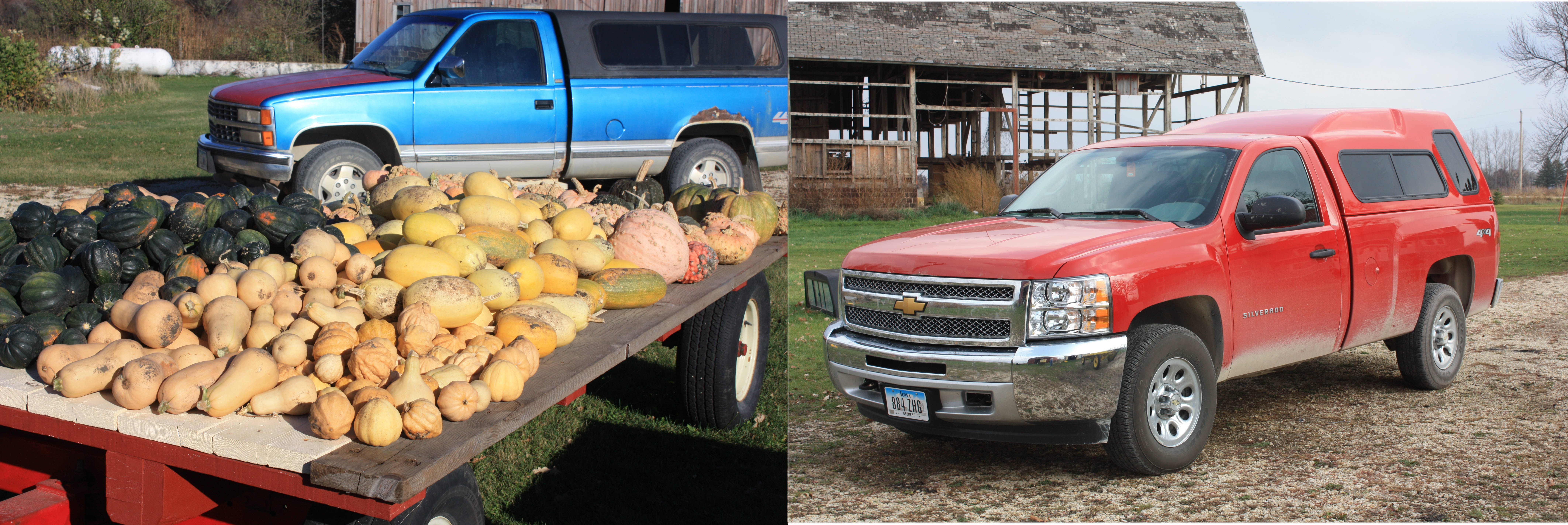
It was September of 2020 and we had just completed our vegetable and poultry drop-offs in Waverly at St Andrew’s Church and Yogi Life. We were cleaning up the tables, trays, coolers and remaining vegetables from the pick up location. Once again, we had taken extra pains to provide “contactless” delivery of our product in an effort to get people good food without risking the transmission of Covid.
We still had a home delivery to make to a person who could no longer drive to either location. We prepared a bag with the veggies that were ordered and made sure we had the eggs ready to go. It was just another way we could both help others during a difficult time while also keeping the Genuine Faux Farm running and, hopefully, profitable.
As Tammy popped out of the truck to drop off the produce and eggs - and have a few moments of properly physically distanced chatting - I waited in the truck and happened to glance at the odometer.
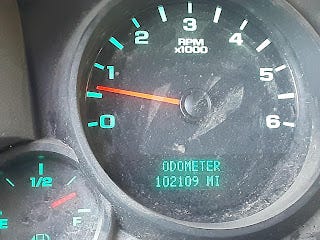
Chumley has been a very good truck for us and we still, even to the present day, think of him as a “new truck.” After all, we don’t FEEL like we’ve had this truck all that long. Never mind that we made the purchase in 2012.
In any event, I looked at the number on the odometer and saw “102109.” As a person who likes numbers and patterns, I was initially disappointed that I had missed “102102” - though I quickly re-framed my disappointment and decided I could look forward to “102201.”
Then, I realized that this represented over 100,000 miles of farm activity. Granted, there are a few miles that were not strictly for farm business, but we can easily justify well over 95% of the travel in this vehicle as farm work. And, frankly, the “non-farm” travel was typically still connected to farm tasks. So maybe I should raise that estimate higher.
As I was musing about palindromes and a history of farm activity, this song popped up on the playlist:
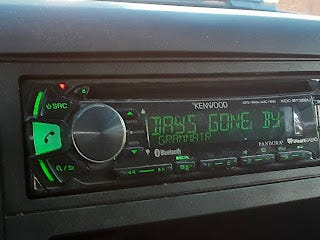
It was hardly fair for my truck to remind me of “Days Gone By.” I mean… there was still plenty of work to do after this last delivery was made for the day. But, Tammy was still chatting.
I guess I had more time to muse.
Chumley has helped us to make an estimated 1200-1500 deliveries of all sorts over the years. Sometimes we were delivering CSA shares, at other times we were making larger deliveries to other outlets. Even after the CSA farm shares were no more, we still have had deliveries to make to our egg/veggie sales list, to bulk purchasers and the food bank/food pantry.
There were times that the back of the truck was packed from front to back, side to side and all the way to the top with coolers, trays and the necessary tables. In fact, there were too many times that I had to REPACK the truck because I noticed one more container had not gone in and we had to find a place for it.
We’ve stuffed the back full of square bales of straw. Chumley has pulled a bin full of 3000 pounds of feed while carrying a bulk bag holding another 750 pounds for the laying flock. We have packed supplies from Nolt’s consisting of drip tape, starting trays, pots, high tunnel plastic and various irrigation equipment. We have piled in bags of starter soil from another supplier. There have been trips for lumber, recycling and trash runs, and a few memorable trips where we hauled items such as a mulch layer and the farm’s lawn tractors.
This doesn’t even begin to consider the trips we have made with chickens, turkeys and ducks over the years. To “the Park,” from “the Park.” To “Freezer Camp,” from “Freezer Camp.” To customers... ok, there is no ‘from’ for that one - which is a good thing.
Both Tammy and I remember a particular midnight drive in the middle of a lightning storm on the way back from dropping off the first batch of broilers in Greene... ah... good times.
I considered pumping the brakes on this trip down memory lane, but I realized that this was a healthy reckoning of a sort.
Grover Set the Tone
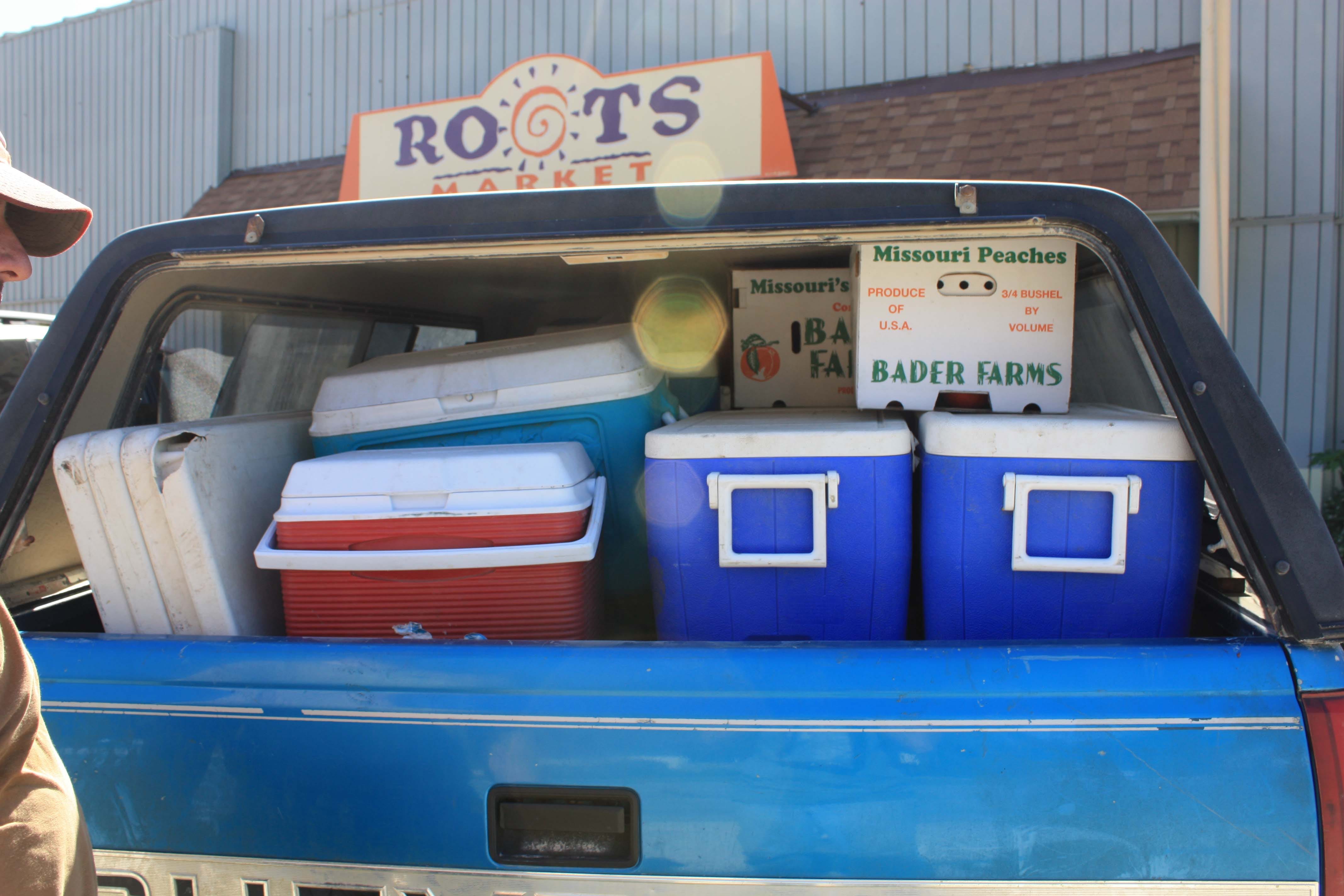
Our first farm truck was named “Grover.” He was so named because he was blue and he could take us “near” and “far.” Yes, you have to appreciate some Sesame Street to get that one.
Grover was initially purchased so we would have a four-wheel drive vehicle while we lived in Chokio, Minnesota. So, he came with us to the farm in 2004 and even though he was not originally intended to be a “farm truck.” We bought Grover when he was already ten years old and we ran him for another ten, when he informed us he was quite done with it all.
The farm truck is a critical piece of equipment. But it’s also an excellent reminder of how difficult capital resources can be early in the formation of a small farm business. Unless you happen to inherit equipment or land, the first five to ten years can be difficult financially as you build the infrastructure of the farm.
Some folks take out loans (assuming they can get them), but we opted not to do that until much later. We were like most folks with our type of farm and at our scale. There was always a great deal of “making do.” And, like many others, we relied on an outside income as well (that was Tammy’s college job) that provided critical access to health care insurance.
But even with that income and the health insurance, things were often a bit tight.
You might notice that the topper of the truck has no back window. Well, that’s what happens when you get a free (someone wanted to get rid of it) topper for your truck and you make it work. There were numerous times when we accepted the imperfect tool because, while it was not nearly as good as the tool we could probably have used, it was far better than nothing.
By the time we reached 2012, Grover was 20 years old. He had survived having a building fall ON him in 2007 and had been “totaled” by the insurance company. But, we knew a mechanic who helped us get him going again. A “new” red hood was used to replace the ruined blue one and repairs were effected within the budget of the dollar amount received for insurance.
And we did what we had to do to help Grover help us for five more years.
But - the day of reckoning did come.
I was backing the feed bin into the granary. But I as I turned the wheel of the truck, I noticed the bin did NOT turn. So, I got out of the truck to look - and found Grover’s bumper had twisted into a very… um… unnatural position.
When your mechanic crawls under your vehicle and says “oh….” in a certain tone of voice, you know it’s over.
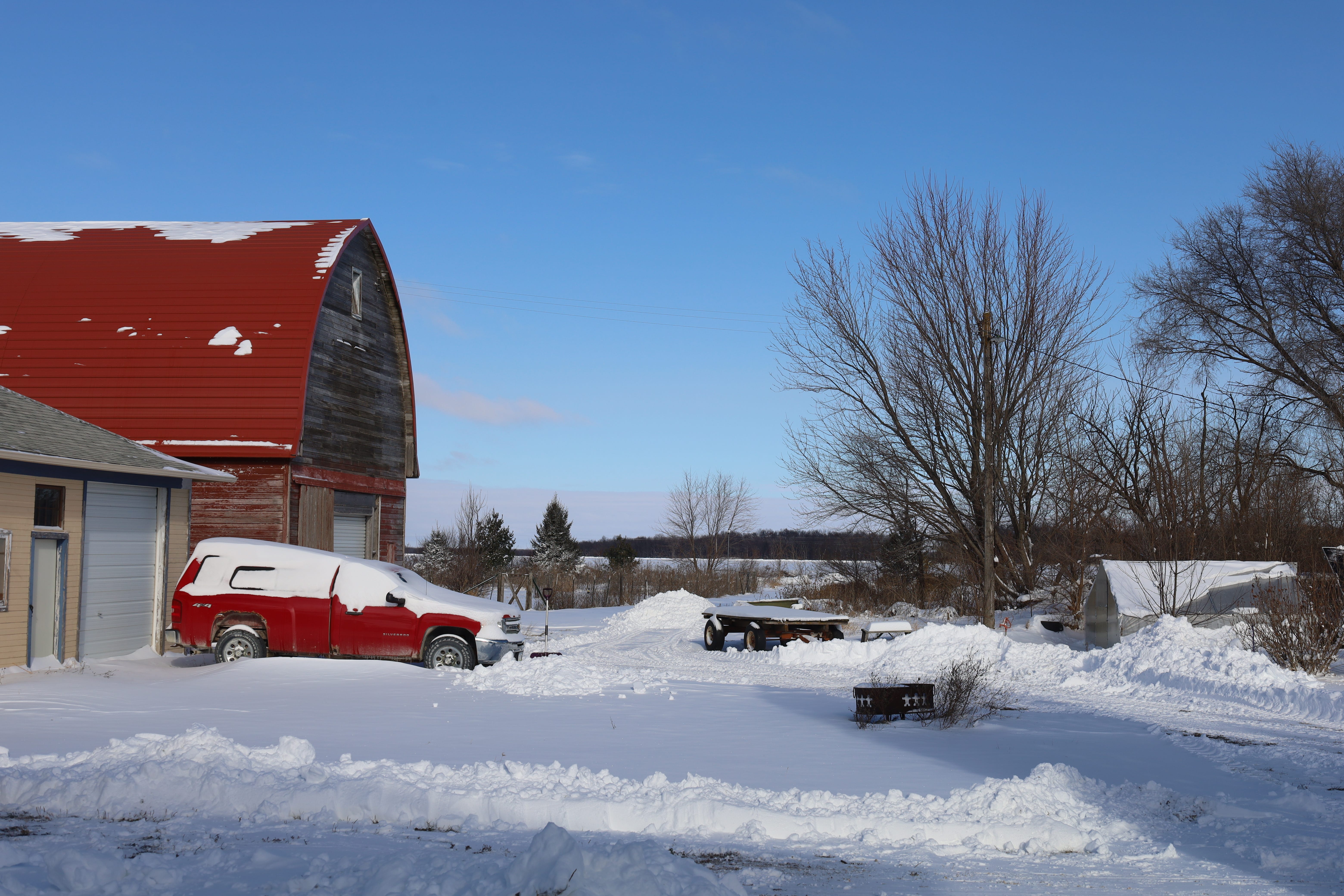
Chumley - plugging along
It’s 2026 and Chumley is doing just fine.
Yes, there is rust. And a distorted tailgate, as only a farm truck might have. Clearly, Chumley has led a life of work and toil, with the occasional injury. But this truck continues to fit our needs and remains the reliable vehicle it has been for many years.
You see, I DO appreciate this truck and I DO hope we can continue to rely on it for years to come. But, this wasn’t just about being nostalgic for a truck - it was about the recognition of years (including those prior to Chumley’s appearance on the farm) spent doing what we do at the Genuine Faux Farm. The number of times each of us has climbed in and out of the back of a truck is a reflection of what it is like to dedicate yourself to a small, diversified farm in northeast Iowa.
And, this is why it can be so hard to try to make a connection with other people when we try to explain what it has been like - doing what we do.
How do you get someone to understand our brand of farming until they have ALSO climbed into and out of a pickup truck thousands of times? How can a person fully appreciate that the continuous motion and low-grade, but continuous, stress that comes with the harvest, clean, pack, load and depart cycle can make it difficult to not want to doze while you drive to your destination? Can you actually appreciate why I still try not to laugh when I remember the face of one of our outdoor cats that happened to get into the back of the truck and was stuck in there as we started to drive down the road? Do you really understand why I sigh a little bit when I have to unload the truck back at the farm yet again after another delivery?
Or maybe you can start to understand... even if you do think it a bit odd that the numbers on an odometer can take my mind to all of these places.
Thank you for reading today. Have a fine remainder of your day.
Read this over Monday morning coffee, and got me reminiscing over the many trucks and vehicles I have owned - particularly one named Big Green, which had nearly 400,000 miles on the odometer when it decided to pull its own plug (almost literally!). In some ways it is unfortunate we have grown so dependent on our vehicles, but they certainly are memory makers, even if they aren't farm trucks. Miles on the odometer reflect our own human odometers.
Well, 10/21/09 was when Barnes & Noble released the e-reader the Nook, if that helps bring resolution, Rob.
"Not having a pick-up is like a day without sunshine", says this owner of a 2001 Tundra with 200K+.
Thanks, Rob.