
No More Retreating
A new farm plan is in place

Somehow, the world has continued turn and the pages of the calendar have been changing. The month of March is upon us and, as we announced back in January, Tammy and I took a break in February to focus on the completion of a new five-year plan for the Genuine Faux Farm.
Well, the break is over. And, while the two of us will continue talking about the details, we have successfully returned with a plan for us and our farm’s direction for the next five years.
Two Big Questions
Because there are numerous considerations and questions we discussed that we do not intend for general consumption, we’ll focus on only two of the “big questions” that we discussed during our retreat. I selected these because they can provide valuable context for what follows and they might shine a light on some of the things that limit local food in much of the United States.
The first question has to do with our continued exposure to pesticides at the Genuine Faux Farm. Our fifteen acres are surrounded by corn and soybean fields that have routine applications of synthetic fertilizer (anhydrous ammonia), herbicides, fungicides and insecticides. It is not uncommon for there to be activity to apply various “inputs” each month from April through July (sometimes into early August).
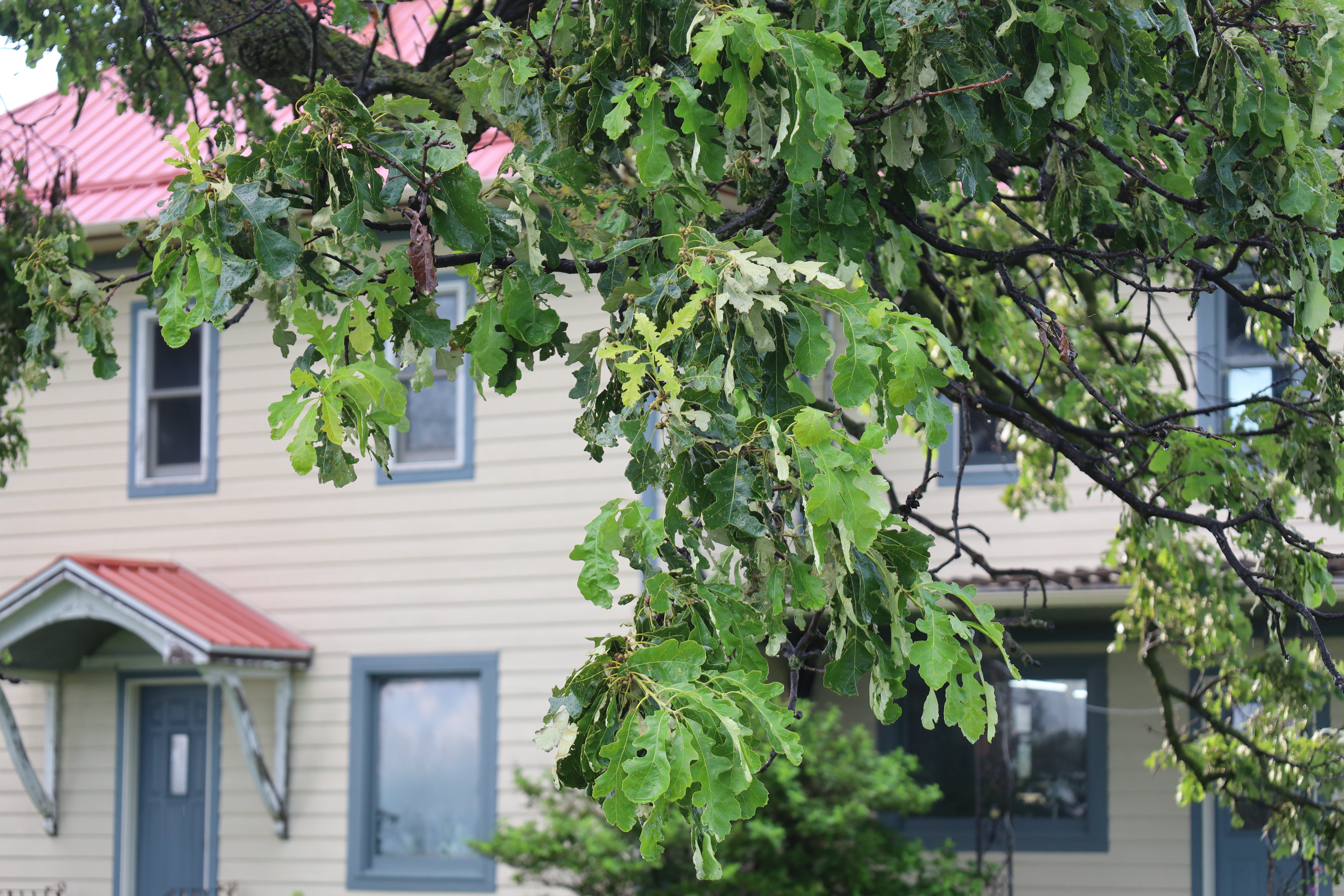
Our Mighty Oaks have exhibited herbicide damage many years in a row now. It is not unusual to find “burning” on the evergreens on the side of the trees facing the sprayed field. Because exposure to these pesticides is a fact of life for us, we worry about pollinators, the wild birds, our poultry, our bees, anyone who works for us, and ourselves.
It has not helped that I have worked for Pesticide Action and Agroecology Network since 2020. Not only do I get to live the worries I’ve listed above, I get to deal with it on a systemic level too. The broader picture that includes the fight against monopolization of our food system - which, in turn, promotes more pesticide use - is a big part of my work with PAN. Thus, my personal concerns are amplified when I take the PAN job home with me. And that’s hard to prevent because I work from home AND the job is, to a large extent, all about my home and farm.
The question we had to answer was “Do we need to address this situation - and how do we address it?” Big hint - the answer to the first part was “yes.”
The second question had to do with the condition of the farm - the farm house in particular.
We’ve mentioned it in articles and blogs before. It’s an old house. It has needed significant work ever since we took over stewardship in 2004. We’ve done what we had to and what we could over the years. But, the farm operation itself usually gets the lion’s share of the time, effort and money.
To put it succinctly, we’ve lived at the Genuine Faux Farm longer than we’ve lived anywhere else in our lives. We are weary of living in a construction zone, which is what our house has become out of necessity and circumstance.
Please do not misunderstand. We’ve made great strides with the house and the farm. But I suspect those of you who have lived in an old house that is undergoing repair and updating will understand without further explanation. For those who have not, big projects that address plumbing, heating and power issues all have spillover. They have a tendency to leave no space untouched and have the effect of putting “normal life” on hold.
And, lest we all forget, we had a full-blown diversified farming operation for a decade and a half and a scaled back operation now that I have a full-time, off-farm job. Some of the best times to do home repair are also critical points for a grower (Rob) AND an educator (Tammy). To understate the issue - we are dealing with a non-trivial problem.
Our main question here was “How do we address our growing dissatisfaction with a house in a constant state of being mid-repair?”
Focus on the Farm House
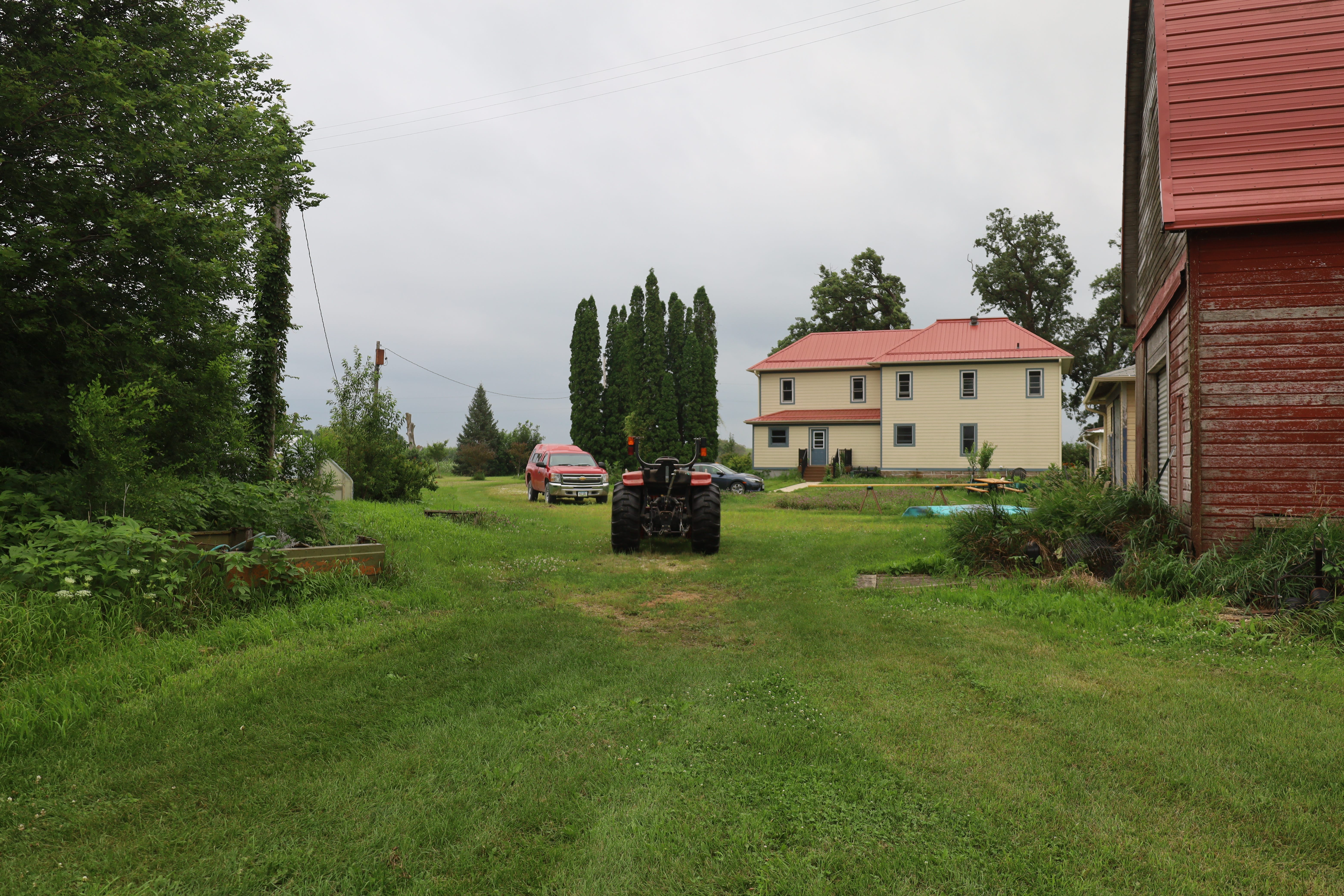
During the next five years, we will be determining if our current location will continue to be our home for the extended future. Our plan is to continue to aggressively address issues with the farm house and property and complete that project during this five-year period.
It is possible that we will love the results so much that we would not wish to leave. Or, after five years, we might decide it is time to move on, and the house would be in good shape for it to find new caretakers.
We both agree that it would be difficult to find new stewards given the current condition of the house. Of course, it looks very nice from the outside now that the siding was replaced, the back deck added and the back entrance revamped. But, the inside of the house is still in what we could say are “intermediate” stages of repair. And it is difficult to find people with enough vision to see past that and want to take up residence.
We started the month of March with a bang and hired Tim Flaig Electric to help us to finally remove the last of the old tube and post wiring and replace with updated service. This includes some of the hardest work - running new wire to the main floor ceiling lights and fans.
This effort, by its very nature has added more disruption as we have had to move most everything in every part of the lower floor to either provide access or prevent damage. There’s a reason it hasn’t moved from planning to action for years. We’re also moving to replace the old wiring for the upper floor lights and to add some plugins.
It might be nice to not rely on the single plug-in that resides in the hall-way for the office. While we have increased the number of plugs from one to five for the whole upstairs since we got here, two of those are temporary. We just have to deal with the total disruption and get this project done. Even if we are trying to get young plants started and we have hen chicks to care for.
And I’d love to not have to remember to step over the extension cords.
Once the electrical is done, we can begin to try to “finish” some of the rooms in the house. We’re going to have a full five years.
The Genuine Faux Farm Continues
We both agree that, as long as we live at the farm, we will continue to have a desire to be farmers. We have also both agreed that we both plan to continue our off-farm jobs, which means we must continue to seek an appropriate scale for the farming operation.
We thought we would share a bare-bones version with everyone here.
1. The future of GFF Eggs
A new batch of hen chicks arrived on Tuesday of this week. This new batch will begin laying in August. That means we will be operating with an older flock that is now laying between 26 and 34 eggs a day. This is well below the 60 to 70 we typically want when we are selling eggs.
The new flock should bring us back to the old levels to meet the demand. But, the current flock will limit sales until the new hens begin to lay. It is possible that we will determine that the current flock is not laying enough and we might opt to process them as stewing hens or find them new homes before the new flock is laying. The good news is that we will soon be able to move them to a new pasture. Once things start greening, their demand for feed will decrease, which makes it easier to accept the lower production levels.
We will also be reviewing our expenses for laying hens. Chick prices have gone way up (for example) and I had a bit of sticker shock when I went to buy a new waterer for the birds. The cost for that piece of equipment has almost doubled over the last two years. The good news is that we do have established infrastructure which will help keep our prices lower.
2. The future of GFF Meat Birds
Processing facilities in Iowa are still an issue, but we have learned that the Martzahn’s is still running under new management. Their location is closest for us (Greene) so will stick with what we know this year.
Our plan is to raise meat chickens (broilers) this summer. They will go to the “Park” in late August and we will offer some of them to customers at that time. The rest will be placed in our freezers to feed us until we raise another batch.
Next year, we plan to raise turkeys. We may utilize a CSA type of model - getting interested persons to place a deposit on a bird. That will help us identify the demand when we order the chicks, but we aren’t sure at this time.
We will continue to alternate between broilers and turkeys at the Genuine Faux Farm from year to year. It is clear to us that we have to limit he number of flocks we are caring for concurrently if we want to continue.
We do have a good idea, based on years of experience, as to efficient flock sizes for our farm. The main variable remaining is processing. If the status of processing facilities change, that might require a change of plan.
3. The future of GFF vegetables and fruit
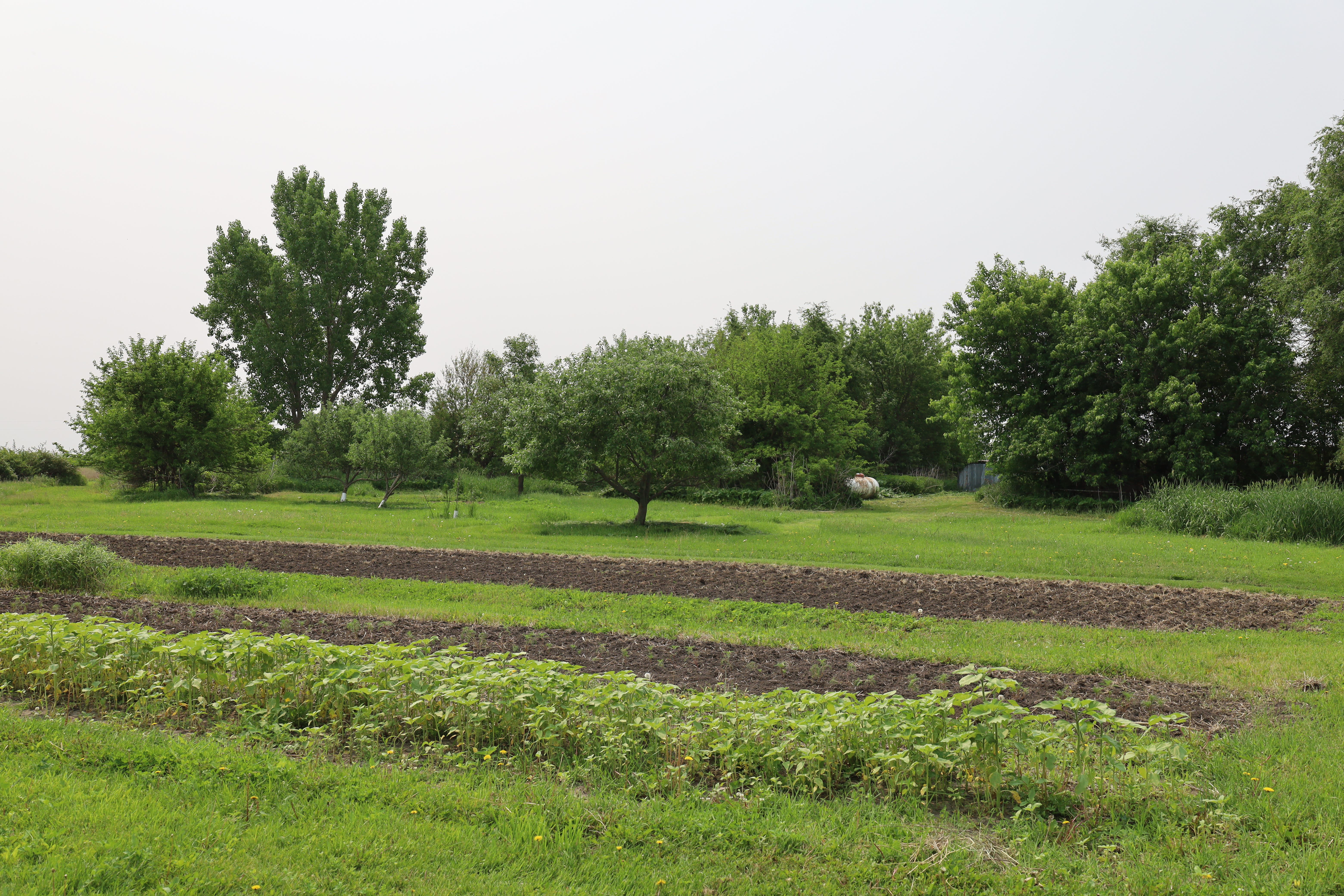
We will continue to grow food in both high tunnels and we will continue to grow outside on approximately one acre of land. As we have learned, this is probably a bit beyond what we should be doing, but we’re always ambitious.
We will continue to offer produce to our email list when it is available. If we are moved to do so and have the energy to do it, we might offer some other opportunities if we have to move produce.
Our plan is to continue with a similar crop growing plan as we’ve had the last two years. We know that squash, onions, broccoli, lettuce, tomatoes, beans, garlic and peppers provide reliable production (barring extremes or pesticide incursions) on our farm. There are other crops, like potatoes and peas, we love to grow that will be included.
Some veggies, like cucumbers and zucchini, we have to limit because they do very well - but we can’t hope to keep up with the harvest. If you look closely at the list in the prior paragraph, many have single harvest points, which reduces the demand on our limited labor. We can’t help ourselves with the green beans - we love to eat them too much.
Sadly, our apple trees were decimated in last year’s storms. If we have any to offer in the offer in the future, it will be on a much more limited basis. And, yes, that makes us sad. We have planted and we will be planting some new trees, but it takes years for them to begin producing in earnest.
Needless to say, the crops listed here are not necessarily comprehensive -
4. GFF farm business goal
Over the last few years, we have worked to balance our farm expenses with the income so they are equal on our balance sheet. Excess produce (and sometimes eggs) have been donated to the food pantry, food bank and other organizations that can get quality food to people that need it. We intend to continue with that model throughout this five-year period.
Of course, opportunity or circumstances may force a change in plans. But that’s true for any of our life’s plans. In recent history, our farm has had to adapt our plans in response to a pandemic and a few medical issues. But if we start with a plan that includes contingencies, we are better prepared for adaptation.
Honoring Past and Future with the Present
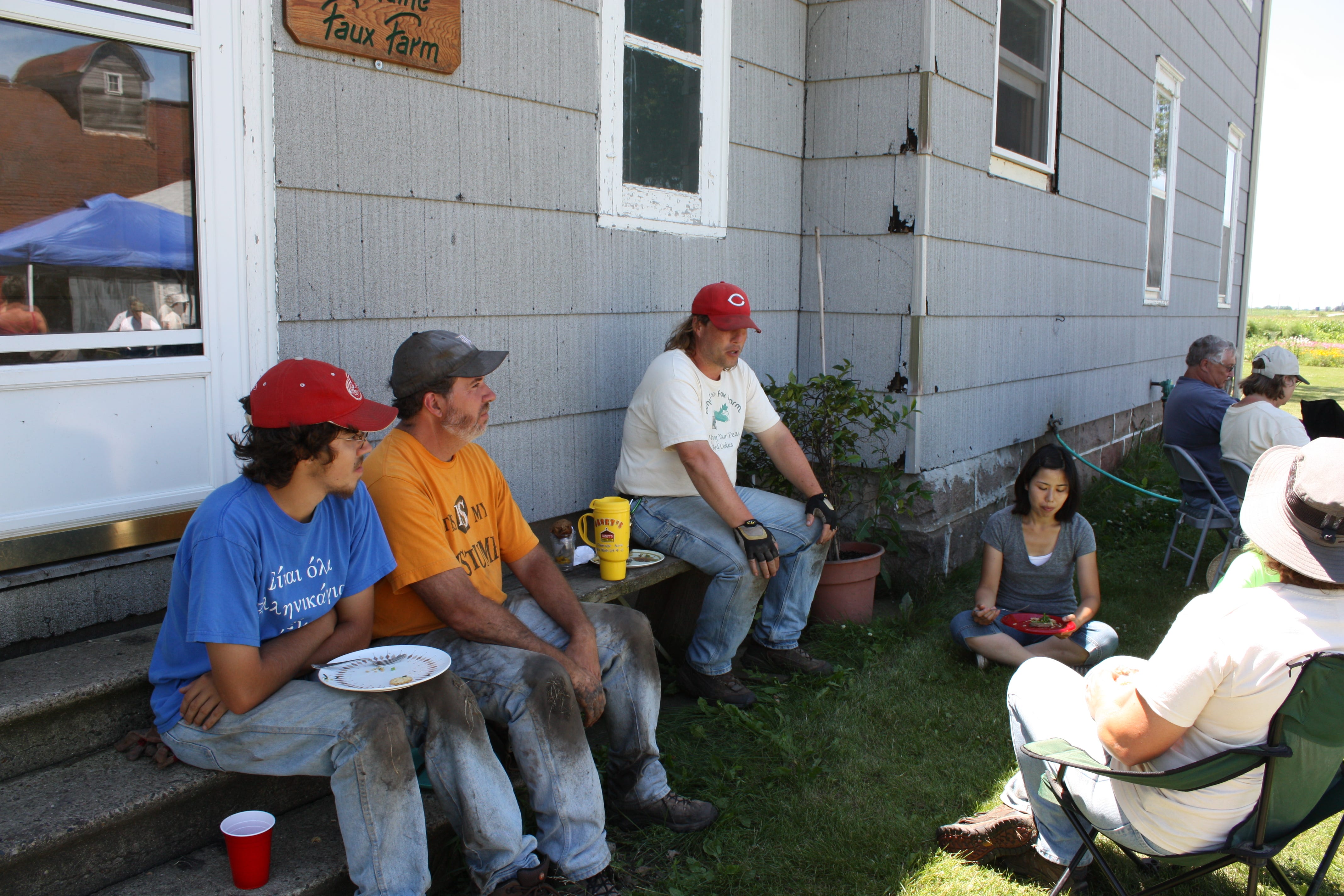
The image above shows the two of us, and others, during a break as we worked to put up our first high tunnel (Eden) in 2010. It clearly shows the wobbly steps to the back door, the degrading windows and dilapidated siding on the house.
We have come a very long way since that time with the help of many wonderful people. It is important to us that we honor the past by remembering where we have been and how that history has enabled us to get to where we are today. It also provides us with benchmarks so we can appreciate our progress.
Our vision for the Genuine Faux Farm is still intact, even if it has been modified in all sorts of ways since 2004. If our hopes for the future had not changed, then I would call us foolish, for we would be ignoring the wisdom of experience and the value of continuous learning.
The next five years will be an opportunity for us to put this place into its best position for future successful stewardship. We are putting forward our efforts in the present to get to that point. But we’re also doing our best to remember to enjoy and live in the present. That may well be the best way we can honor both our past and our future.
Thank you for joining me today and taking some time to read my words. Have a fine remainder of your day!
Enjoyed reading this very much, Rob.
Many that are surrounded by ever more intense soy and corn production are asking the same "stay or go" questions, and the "what-to-do in the meantime" questions as well. My own life experience has shown that even if you decide to go, you might find other issues and concerns that weren't evident - wherever you decide to land. You can run, but . . .
Writing that brought to mind the title of the old 1970 Moody Blues album, "A Question of Balance".
Thanks, Rob, for keeping us up on what's happening at GFF and for inspiring to better our own lives by following your example.
I also enjoyed your closing thought on remembering where you've come from when looking ahead to what's to come. I had this epiphany as a youth on a long mountain trek to the summit of Mt Washington in NH. After several hours, we had just moved above the tree line, paused to catch our breath, and finally gotten a clear view of the still-distant summit ahead -- so far still to go. But, I turned around and looked back and marveled at the scene below -- an eagle's view of the towns and countryside from which we had so recently come, so far. It was a breath-taking moment I'll never forget. So, yeah, look ahead to what's to come, but also pause to look back and enjoy how far you've come.