
Supporting Pollinators
After Pollinator Week is Over

This week is Pollinator Week and I’ve noticed some trends regarding this nationally recognized event since it began in 2007. My interest in this week should be no mystery. We started the Genuine Faux Farm in 2004/2005 and were avid gardeners prior to that.
In its initial years there was tremendous energy for Pollinator Week. Events and activities were driven by individuals and non-profit organizations more than anyone else. But after a while, corporations began to find ways to “cash in” and perform a little green-washing to reap the benefits that should have been reserved for the pollinators themselves. Non-profits were not without blame as they were also finding that Pollinator Week was a good time to raise funds. They began making the mistake of seeing it as a cash cow first and an opportunity to educate and make a difference second.
Eventually, media bandwidth of all types was saturated and enthusiasm for the week of celebration, and for the pollinators themselves, waned. In the last two years, energy for Pollinator Week has been quite low, in part because people are struggling with so many other difficult things right now.
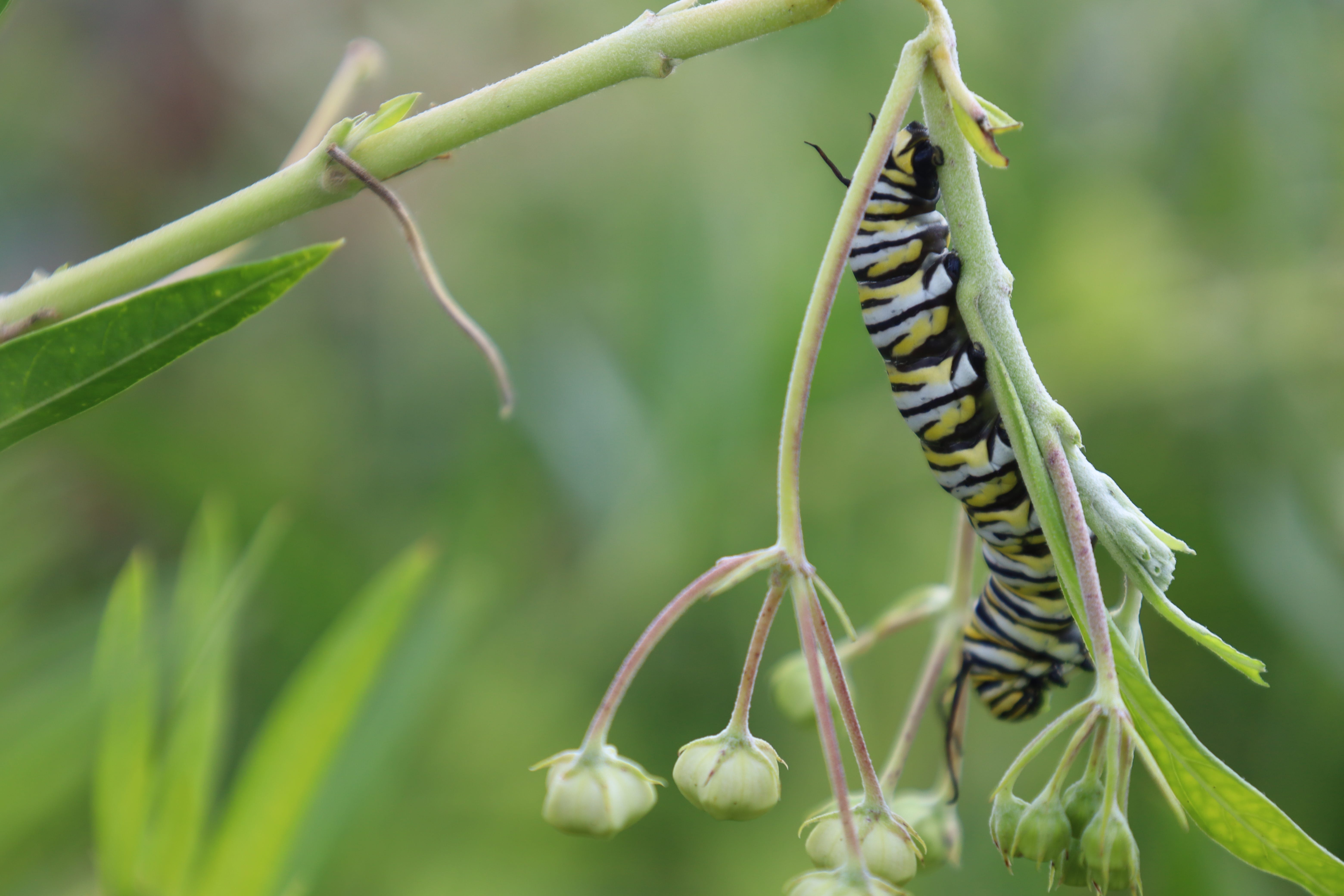
Pollinator Week Trending Down and Maybe Back Up?
Pollinators and beneficial organisms are both important and interesting. In fact, I have found new energy by writing about them for this iteration of Pollinator Week. It’s a chance to talk about something where I can see directions we can take to make things better - and those directions are doable!
As Communications Manager for Pesticide Action and Agroecology Network and Steward of the Genuine Faux Farm, I was given the opportunity to write not one, but four articles. The first three were sent to PAN’s member email list on Monday through Wednesday of this week. The last will go out on Friday.
For full disclosure, we did include a link for donations in those emails, but the fund raising was not the focus of the content. It’s what we call a “soft ask,” which is common for non-profits to do when they offer materials to the public. If we don’t ask, we won’t get the money - and if we don’t get the money, we doesn’t do things like write about pollinators anymore. The key difference, in my opinion, is that we didn’t lead with “give us money because we like pollinators on Pollinator Week.”
All of that said, I am using my privilege as author to share the Friday entry with you on our farm’s Substack. Links to the other articles can be found at the end of this article. And for those who might like a push, Tammy says the third entry was her favorite.
I hope you enjoy the read and maybe learn something new!
Pollinator Support for Pollinator Week
Pollinators and beneficial insects need year-long support, not just some nice words over the course Pollinator Week. It reminds me of a conversation I had with a respected peer and I remember them saying that “it matters more what you do the rest of the week than it does what you say on Sunday.” And here we are, saying all sorts of things about supporting pollinators during Pollinator Week.
But what happens next?
Lip service for Pollinator Week
The history of Pollinator Week goes back to 2006 when Senate Resolution 580 was passed and a proclamation was issued by the Secretary of Agriculture the following June. Since that time, many groups and individuals have organized and participated in events that try to elevate the importance of pollinators.
As the topic became more popular, some corporate interests looked to capitalize on the movement. For example, Bayer Corporation offered the Blue Ribbon Bee Keeper Award and a seed giveaway in 2020. The irony is that Bayer holds responsibility for significant harm to pollinator populations in the first place. What they have done the other fifty-one weeks of the year doesn’t match what they say during Pollinator Week.
Bayer was among the forerunners in the research and development of neonicotinoid insecticides, which have been shown to harm bees and pollinators of all types In fact, if you would like more information, the Xerces Society provides a searchable database for research regarding the dangers of pesticides to invertebrates.
In an effort to try to show that they actually cared about pollinators, Bayer put out a web page giving lip service to bee health. The page is no longer active, but I was able to locate the same page I saw in 2020 using the Wayback Machine, an internet archive. On the page, Bayer made the claim that their products are necessary and that neonicotinoids do not harm pollinators.
Well, actually, they were only concerned about domesticated honey bees. Things like the Grass-catching wasp were not on their radar. The only supporting evidence they gave was a link on the words “research shows.” It was the only link in the text on that web page. And where did it go?
It takes you to a website hosted by an organization that is sponsored by Bayer, Syngenta, and related pesticide companies. And it did NOT go directly to any research. This is why you bother to check out your resources and carefully consider the motivations they might have. Otherwise, you might believe that Bayer really does care about pollinators more than they do their profit margins.
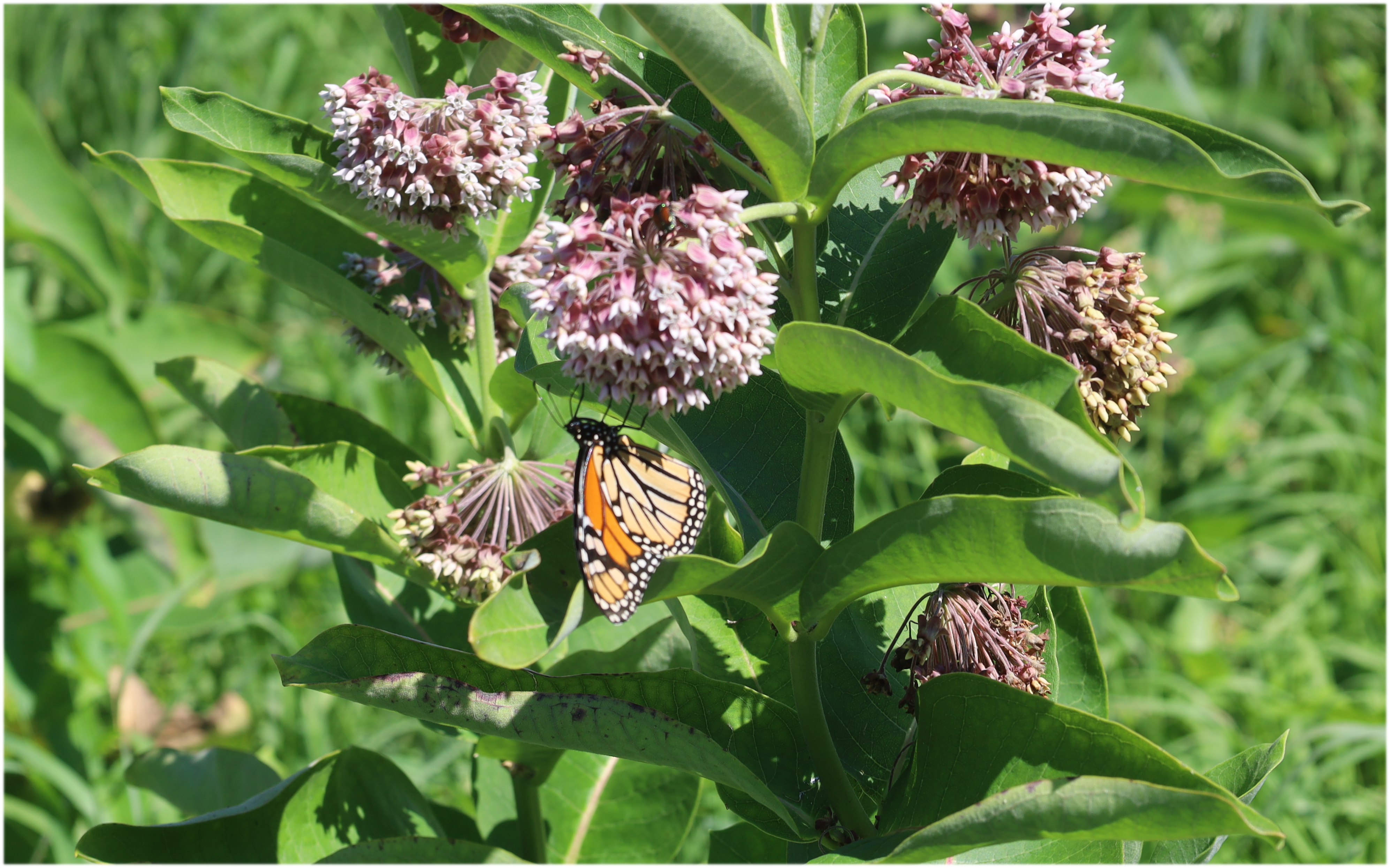
What you do matters in the weeks beyond Pollinator Week
I have heard the argument that large businesses and people with the most money and power have so much control that it doesn’t matter what each of us does in the grand scheme of things. Ok, I’ll grant you that I don’t have much power in this world on my own. But, I do have enough power to make a difference. And so do you.
How we make that difference can differ greatly from person to person. But when we all work towards the same goals, we will be surprised by the change that we can bring about!
On our fifteen acre farm, we do our best to keep learning and finding ways to provide healthy habitat for beneficial organisms. While you may not operate a small-scale diversified farm, there are things you can do as well.
You can advocate in your community for a reduction in the use of insecticides in your public spaces. If you work for or own a business that maintains some outdoor space, you can push to put in native plantings rather than manicured, single-species lawns. You can encourage your town to change zoning laws to allow for more natural plantings. You can refuse to buy bedding plants and perennials that have been treated with neonicotinoid insecticides.
You can choose to find ways to co-exist with insects that you were taught to fear and avoid when you were young. Just like I have with wasps.
You can also look for opportunities for policy change at the state and national levels. Tell your governor to take action to protect pollinators in your state. Encourage legislation that would remove the loophole that allows neonicotinoid seed treatments to be used without any regulation.
What I do matters to the tens of thousands of creatures that live on or pass through the Genuine Faux Farm. If we do our part here and you do your part where you are, the bees, hoverflies and wasps will have more opportunity to thrive and the land we live on will be more alive because of it.
This is the fourth in a Pollinator Week series for Pesticide Action & Agroecology Network. Our first, second and third entries can be found by following the links.
Many years ago when I was working and could afford it, I bought a 40-acre farm which was not at all well-suited to farming. I did prairie restorations and oak woodland restoration on what wasn't already forested. My plan is to get this into a permanent conservation easement and donate it to a conservation organization that will maintain it in perpetuity (as much as there is such a thing). It needs more work now than I have the ability to keep up with, but hopefully some volunteer help will change that soon.
Thanks for encouraging each one of us to make a difference, Rob.