
Things "They" Don't "Get"
When you understand, but you don't

Over time, I have come to realize that one of my regular tasks as a small-scale diversified farmer and a writer is to serve as a translator. I often take it upon myself to attempt to explain what being a land steward and local food producer is like.
There are, of course, some people who have shared or similar experiences. They get it because they’ve lived it. I don’t even have to write it all that well and they still appreciate the camaraderie that comes with acknowledging either a kindred spirit or one who has walked that path.
Then, there is the rest of you. You might understand after I describe it, but you won’t get it. Not really.
And no, that’s not even a disparaging statement, because I’m sure I won’t really get some of the things that come with your experience. Because hearing about it, no matter how well it’s told, is not the same as living it.
Beautiful until it isn’t
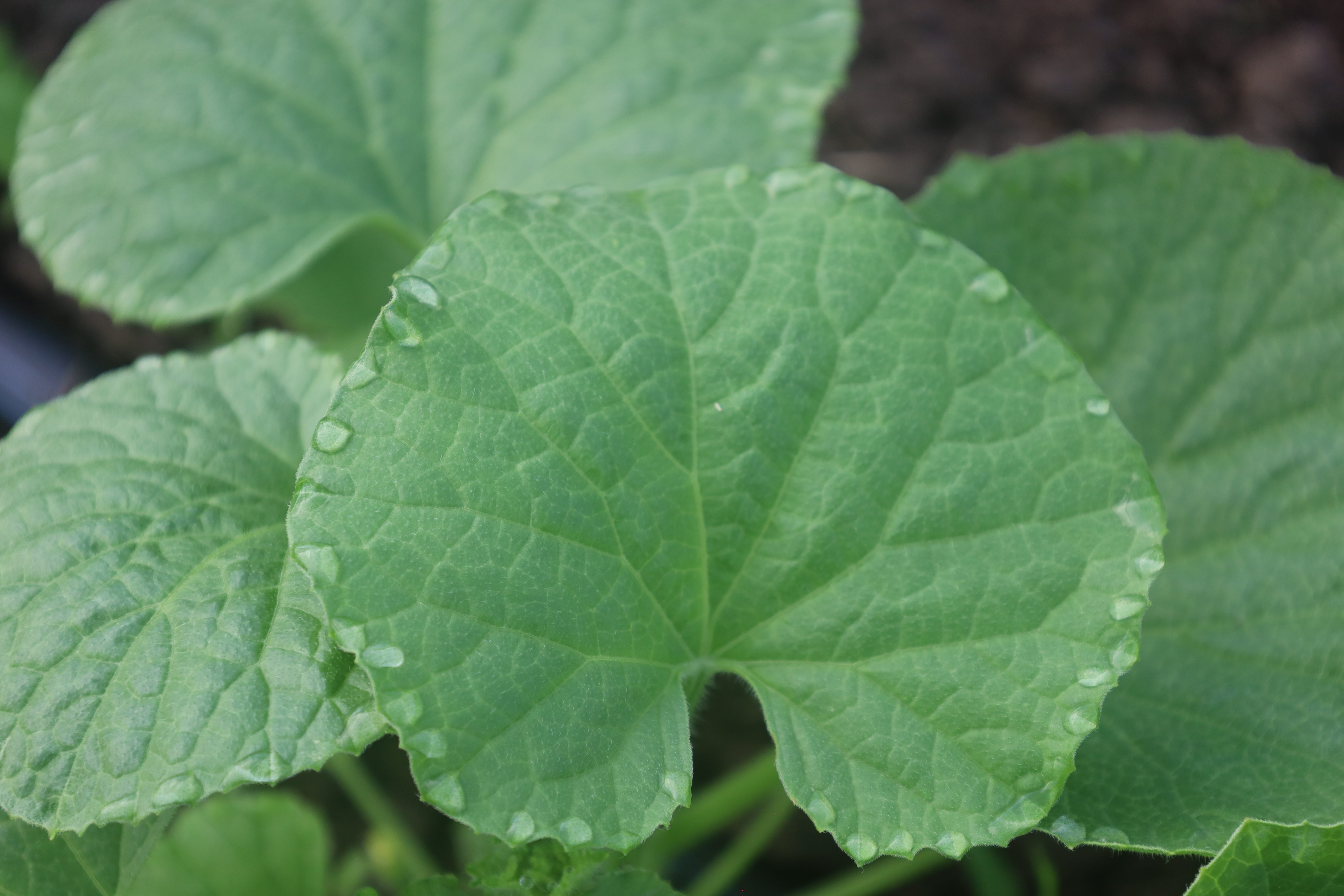
I know I’ve mentioned it before in the Genuine Faux Farm substack, but life on the farm can be a roller coaster. One moment, you’re on top of the world because the melons in the high tunnel look great. And it is OH SO COOL to see the water droplets lining the edges of all the leaves early in the morning.
Cool enough that you run back to the house and grab the camera just to get this shot.
The next moment, you’re desperate to run an errand OFF the farm so you can flush the images the latest disaster from your head.
Case in point, you all last heard from us about our farm on July 2. It was there that I shared how well things were progressing at the farm in 2026. I did mention there that we had a storm that did a little damage to some of the crops. Nothing leading to permanent losses - thank goodness!
But that was the beginning of a period of time where the fields were either mostly too wet to work in or the heat, insects and mosquitos made it close to unbearable. Now the “clean fields” are no longer “clean” and our status of being “mostly caught up” has been altered to “nope, that’s not going to happen” for many projects.
It’s at this point I want to remind you that we are farmers. We can’t be happy for long. It’s not allowed. But it is also true that we will not be defeated either. The “R” in Rob stands for “resilient,” or maybe it’s “rutabega.” I dunno. I studied math and computer science, not acrostics.
Now, before you get all concerned, let me assure you that we are fine and we will be fine. In fact, we HAVE had some excellent green bean, zucchini, snow pea, lettuce and garlic harvests. We’re starting to pull in broccoli and the potatoes seem promising.
Just remember, this is a roller coaster. We get all of the twists and turns and ups and downs a person could ask for.
Or dread.
And also, I want you to recall the theme of this article. If you haven’t done something similar to what we do, you probably won’t get it. Not really.
And that’s okay.
What matters is that you try to understand as much as you are able. Let me whine about it a bit. Then let me happily talk about something that’s going well. Make the effort to connect with it in whatever way your experience allows you to. But don’t try to act like you fully understand when you don’t.
That will only cause me to roll my eyes in frustration.
Wash cycles
I started washing laundry at a fairly young age. It was a chore I could do around the house and Mom showed me most everything I needed to know about that task. There were some things I was supposed to set aside for her to wash, but I certainly could do most loads.
It was a family of six, so there was plenty of laundry. And Mom used cloth diapers for the babies, so those needed washing too. Thus, the job was non-trivial. I will grant you that Mom probably dealt with the worst messes. But I didn’t get a complete pass on the human manure clean up either.
When I started playing baseball, that created even more laundry. And yes, I usually washed my own baseball gear. And no, I never did end up with a pink uniform, so I must have listened to the laundry instructions carefully enough.
And yet, I can say, without exaggeration, that all of that did not prepare me for the shear volume of laundry we create, with just two people, on the farm. Since we scaled back, the amount of time spent washing clothing has decreased. Thank goodness. But it is still significant.
If you can’t quite relate to what I am saying here, let me recreate a common scenario at the farm. Even when we go all out to do ALL of the laundry that has accumulated in the various baskets, we will find another basket worthy of ANOTHER load at the end of that day. It’s like it breeds in the dark corners of the farm house, ready to hatch and reveal itself in that moment after the last bit of clean socks are folded and put away.
I am sure there are other people in other walks of life that also deal with this laundry issue. But if you haven’t lived it, you won’t exactly get it.
You can only nod and say something like, “that sounds like it can be frustrating for you.” Then the farmer who had warmed themselves up for this rant will pause and realize the only civil thing is to say, “thank you, it is” and then move on to a more positive subject.
And pesticide drift…
If you know me, you had to see this coming. If you don’t, here it is - it’s almost always part of my writing this time of year.
We are approaching the Anniversary We Did Not Want. It’s only days away. And if you haven’t experienced this level of chemical trespass, you most certainly will not get how I’m feeling right now.
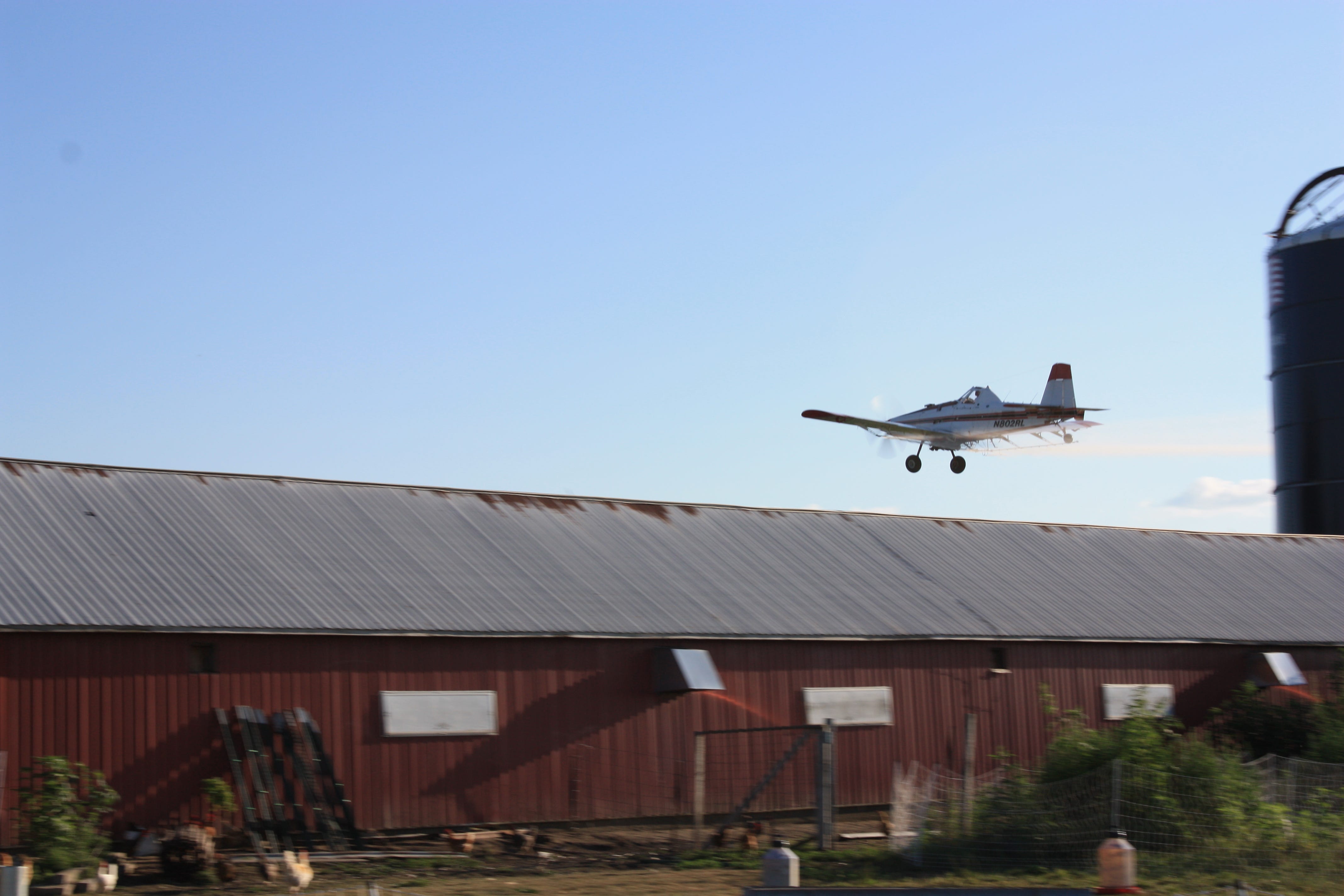
I saw my first spray plane on Thursday.
I don’t have problems with my blood pressure. Except for these moments.
I smelled insecticide/fungicide for the first time during this spray season on Wednesday. And I had to keep myself from swearing out loud and all other thoughts I had prior to that moment left me. I like to think that I do my best to be kind, understanding and supporting of others - including those I don’t understand or relate to. But in these moments, there are a whole host of individuals I despise, whether they deserve it or not.
Soon, the planes and the spray rigs will be everywhere as they attempt to put pesticides on nearly every square inch of Iowa’s tillable land. They’ll do this while people are on their bikes across Iowa in RAGBRAI. They’ll spray while I attempt to get that weeding done. They will expect you and everyone else to go inside even when the day is glorious because “you should know better,” because, you know, it’s Iowa.
And nearly everyone in the state will pretend that these chemicals do not drift off-target and they won’t hurt us.
At least not right away.
And we enter this realm of make believe because it is so horribly difficult to reconcile that we would so willingly poison ourselves and the land we live on. Even if we think we know better, we give up before we even start to fight because we don’t know how to win the battle.
You can’t possibly get exactly how I feel about specific spray events on our farm that resulted in lost crops and illness. But, you can understand what it feels like when big corporate interests build a system where pesticide exposure is something we should expect and just deal with.
The will is building to do something about it. Let’s get this right.
Thanks Rob. I think most of us that live anywhere in the Midwest, whether they know it, smell it, or feel it - have been victims of at least vapor drift. In addition, a trip down the "lawn care" aisle of any department, feed & seed, or farm store, (along with a careful reading of the ingredients label) should at least give folks pause for a moment of thought. Do you know what the lawn care people are spraying on your neighbors' lawns to keep them so 'clean and green'? I don't think most of us really do. Their trucks look eco-friendly, of course.
Trees tell lots of stories, if you know how to look.
I am beginning to see the decline in many pollinators out here adjacent to Industrial Ag Acres as "Bumblebees in a Bean Mine". Corn/Ethanol mine too, of course.
[ Living alone, I do laundry on my terms and generally don't pay much attention to laundry labels. I don't buy things that can't take a normal laundry cycle and last a long time. People who judge me poorly by the shirt on my back are probably not folks I need to associate with anyway. ]
While one can never know exactly how someone else feels, Rob, one can search for analogous situations that one has encountered in order to empathize with another. I have never experienced pesticide drift to the extent you have, but have been victimized by Big Ag in other ways, so I can at least relate, if not fully understand.
On another note: Laundry! When I retired, in order to be more helpful, I took on some household chores; one was laundry. I was admonished to be very careful. My first time, Lisa was out of town, and I wanted to do well. I sorted the laundry according to the garment labels, "cold wash only, hand was only, line dry, low dryer setting", etc. By the time I was done sorting, I had eight piles! It took me all day to complete the eight loads! Upon her return, Lisa set me straight. So I guess I (thought I ) "understood", but you're right, Rob, I really didn't.